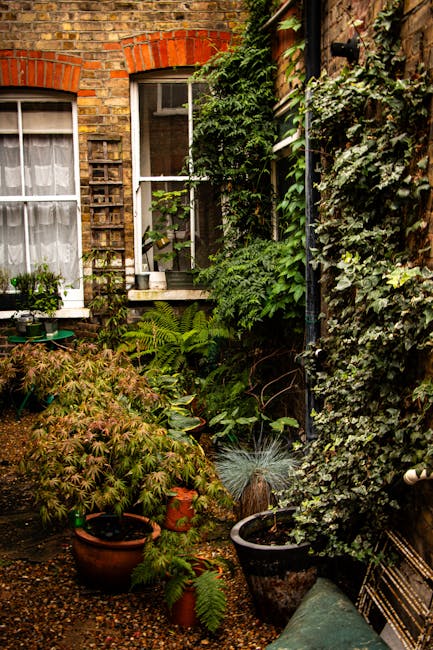
Gardeners near Whitechapel Gallery for small city courtyards

If you have a compact courtyard near Whitechapel Gallery, you already know the challenge: you want it to feel calm, useful, and a little bit special, but there's not much room to play with. That's exactly where experienced gardeners near Whitechapel Gallery for small city courtyards can make a real difference. The right approach turns a tight urban space into something greener, easier to maintain, and far more enjoyable to step into on a quiet morning or after a long day. In a place where space is precious, every planting choice, every surface, and every metre matters.
This guide walks through what works, what doesn't, and how to plan a courtyard that actually suits city life rather than fighting it. You'll find practical advice on maintenance, design, materials, safety, and the sorts of decisions that save hassle later. No fluff. Just useful guidance you can act on.
Why Gardeners near Whitechapel Gallery for small city courtyards Matters
Small city courtyards are a different game from larger suburban gardens. They can be narrow, overlooked, shaded by surrounding buildings, or interrupted by paving, drainage covers, and awkward corners. In that setting, garden work is less about filling space and more about making smart use of what is already there. That may mean lightening a dark patio, improving drainage, pruning back a crowded shrub, or choosing containers that won't dominate the whole area.
Near Whitechapel Gallery, many outdoor spaces are part of a dense urban rhythm. You may be dealing with foot traffic, noise, pollution, limited access, or neighbours close by. A good gardener understands those realities. They won't simply treat the courtyard as a tiny version of a big garden. They'll look at it as a living room outdoors. Different, and much more interesting, really.
It also matters because compact courtyards can go downhill quickly if ignored. One season of overgrowth or fallen leaves and suddenly the space feels cramped, damp, and a bit tired. Moss appears. Pots dry out too fast. A few self-seeded weeds become a full-blown nuisance. The right maintenance rhythm stops the whole thing feeling like a chore.
Expert summary: For small city courtyards, the best gardening is usually the most disciplined gardening. Clear structure, manageable planting, regular maintenance, and materials that cope well with urban conditions usually beat overcomplicated designs every time.
If you're comparing options, it can help to look at the broader services overview first, then narrow down to what your courtyard actually needs. That keeps the conversation practical rather than abstract.
How Gardeners near Whitechapel Gallery for small city courtyards Works
The process usually starts with a simple assessment. A gardener will look at the size of the courtyard, the amount of sunlight, how water drains, what the surface is made from, and how you want to use the space. Some courtyards are for sitting out with coffee. Others need to survive bikes, bins, pets, or heavy daily use. Truth be told, those details change everything.
From there, the work typically falls into a few practical stages:
- Assessment and planning - identifying constraints, opportunities, and priority fixes.
- Clearance and preparation - removing dead plants, unwanted debris, or cluttered growth where needed. A targeted garden clearance can make a surprisingly big visual difference in one visit.
- Structural tidy-up - pruning, edging, reshaping, and deciding what should stay.
- Planting or replanting - choosing plants that suit light, wind, shade, and container life.
- Maintenance setup - deciding how often watering, trimming, and seasonal checks should happen.
In smaller spaces, the gardener often has to balance beauty with practicality. A courtyard that looks gorgeous but needs constant watering in summer may not be the right answer if you're busy, away often, or don't want to be outside at 7 a.m. with a hose. The aim is to create something sustainable for your real life, not an idealised version of it.
For many people, ongoing care matters more than a one-off makeover. That is where garden maintenance becomes the backbone of the space. Regular upkeep keeps the design sharp, protects plant health, and stops the courtyard from slipping back into chaos. Small areas show neglect quickly. They also show care quickly. Nice, in a way.
Key Benefits and Practical Advantages
A well-managed city courtyard can do more than look attractive. It can change how the whole property feels. The benefits are practical, emotional, and often a bit more noticeable than people expect.
1. Better use of limited space
Good courtyard gardening makes every corner earn its keep. Vertical planting, compact shrubs, multi-purpose decking, and carefully placed containers help you get more from a small footprint without overcrowding it.
2. Easier day-to-day upkeep
When the layout and planting are chosen with maintenance in mind, the space becomes easier to keep tidy. That means fewer emergency fixes, less constant watering, and less time spent battling overgrown corners.
3. A calmer environment
In a busy part of London, a small green space can soften the noise and visual clutter around you. Even a modest courtyard with the right plants and surfaces feels more restful. You will notice it when you step outside and your shoulders drop a little.
4. Improved property presentation
Courtyards are often visible from kitchen doors, shared hallways, or ground-floor rooms. A neat, thoughtful garden can lift the whole impression of a home or commercial property. It's the kind of thing people feel before they can explain why.
5. Better plant survival
Plants chosen for shade, heat, wind exposure, and container growing are more likely to thrive. That reduces replacement costs and avoids the cycle of buying plants that look lovely for two weeks and then sulk, which is annoyingly common.
6. Safer and cleaner surfaces
In shaded courtyards, moss, algae, and damp leaf litter can make paving slippery. Regular care improves safety and keeps the space looking cared for rather than forgotten.
If your courtyard needs more than simple plant care, it may also be worth thinking about hard landscaping elements. For example, landscaping can help with layout, drainage, and surface upgrades, while decking services can create a warmer, more usable sitting area where paving alone feels cold or cramped.
Who This Is For and When It Makes Sense
This kind of gardening service makes sense for a wide range of people, especially if the space is small, overlooked, or simply difficult to manage on your own. Let's face it, tiny courtyards can be deceptively needy.
- Flat owners and tenants who want a tidy outdoor corner without committing to a big garden project.
- Landlords and property managers who need the courtyard to look presentable between tenancies.
- Busy professionals who want greenery but not the weekend workload.
- Small hospitality or office premises that need an attractive entrance or breakout area.
- People with shaded or awkward spaces where the wrong plants have already been tried and failed.
- Anyone dealing with neglected outdoor areas that need a reset, not just a quick sweep.
It also makes sense if you have health or mobility considerations. A courtyard should support your life, not demand too much of it. When access is tight or the area has a lot of steps, containers, or hard edges, a gardener can simplify the layout so it's easier to manage safely.
If you're not sure whether you need a one-off tidy-up or a longer-term plan, start with the basics. A quick assessment, a realistic maintenance schedule, and a discussion of seasonal priorities can usually point you in the right direction.
Step-by-Step Guidance
Here's a practical way to approach a small courtyard project without overcomplicating it.
Step 1: Decide what the courtyard should do
Ask one simple question: what is this space for? A quiet place to sit? A planting-heavy feature? A low-maintenance view from inside? Storage with a greener feel? The clearer the purpose, the better the design decisions.
Step 2: Measure the usable space properly
Not just the overall dimensions. Measure the bits you can actually use. Factor in doors opening, bins, walkways, and anything fixed in place. In small spaces, a few centimetres can matter more than you'd think.
Step 3: Check light, shelter, and drainage
Some courtyards are bright for only a few hours. Some are windy tunnels. Others stay damp after rain. These conditions tell you what will thrive and what will fail. Shade-loving ferns will be unhappy in full sun. Mediterranean plants may hate a dark, wet corner. Easy mistake, and very common.
Step 4: Clear out what is not earning its place
Dead plants, cracked pots, cluttered edging, and tired furniture can make a tiny space feel even smaller. A bit of targeted clearing can instantly create breathing room. If the area is heavily cluttered or overgrown, a professional garden clearance visit is often the quickest reset.
Step 5: Build the layout around movement
Keep pathways clear. Leave enough room to open the door fully. Make sure seating doesn't block access to planting or storage. If you can't move around comfortably, the courtyard will feel annoying no matter how pretty it is.
Step 6: Choose plants that suit city conditions
Look for hardy, compact, and container-friendly plants. Layer height carefully. Use repetition for structure. In a small space, too many plant varieties can look messy rather than lush.
Step 7: Plan the maintenance rhythm
Decide what needs weekly care, what needs monthly care, and what needs seasonal attention. A courtyard with a manageable routine is far more likely to stay beautiful. If you want the space to stay crisp, ongoing garden maintenance is usually the smartest investment.
Step 8: Review the space after a season
After a few months, see what worked and what didn't. Maybe one corner is too shady. Maybe a planter is too thirsty. Maybe the courtyard needs more vertical structure. This is normal. Gardens evolve, especially in tight urban settings.
Expert Tips for Better Results
Small courtyards reward restraint. That's the big lesson. A few well-judged moves usually outperform a lot of busy ones.
- Use fewer plant types, but use them well. Repetition creates calm. Three repeating textures often look better than ten competing ones.
- Mix hard and soft surfaces carefully. Too much paving can feel stark. Too much planting can feel cramped. The balance matters.
- Think vertical. Trellises, wall planters, and climbers can add depth without eating floor space.
- Choose containers with drainage. Beautiful pots are great. Soggy roots, not so much.
- Go for structure first, flowers second. Evergreen shapes, clean lines, and reliable foliage give the courtyard backbone through the year.
- Keep an eye on pruning. In compact spaces, even one overgrown shrub can throw the whole area off.
- Make watering realistic. If a plant needs a lot of attention and you know you won't give it, choose differently. No shame in that.
A useful rule of thumb: if a design choice makes maintenance awkward, it probably won't last. Beauty is great. Beauty that survives a damp Tuesday in November is better.
For clients who want a more polished finish, a little structural work can help enormously. A neat border, a refreshed surface, or a small run of hedge trimming around a privacy screen can sharpen the whole feel of the space without overdeveloping it.
Common Mistakes to Avoid
Most courtyard problems come from trying to do too much, too fast, or choosing plants and materials that don't suit the environment. Here are the big ones.
Ignoring shade and wind
Urban courtyards often have strange microclimates. A spot that looks bright from the doorway may be cold, windy, or sun-starved for most of the day. Plant accordingly.
Overfilling the space
It's tempting to pack in extra pots, a bench, a water feature, and a couple of large shrubs. Then suddenly the courtyard feels like a storage cupboard with leaves. Leave some breathing room.
Choosing thirsty plants for a hard-to-water space
If you are not there often, thirsty planting becomes a burden. Be honest about your routine.
Skipping drainage checks
Pooling water and saturated pots are not just messy; they can damage surfaces and plant roots. A quick drainage review can save a lot of trouble later.
Forgetting seasonal changes
A courtyard that works in May may feel bare in January if it relies too heavily on summer-only colour. Use evergreen backbone planting and texture to keep it alive year-round.
Letting maintenance drift
This is the classic one. A couple of missed months, and the whole space starts to slip. In small gardens, neglect has a loud voice.
If the garden has become genuinely unwieldy, a reset may be better than patching around the edges. In some cases, combining clearance with landscape gardening gives you a cleaner long-term result than piecemeal fixes.
Tools, Resources and Recommendations
You do not need a massive toolkit for a small courtyard, but you do need the right basics. A few decent tools go a long way.
Useful tools
- Hand pruners for light trimming and deadheading
- A compact rake for leaves and debris
- A stiff brush for paving and hard surfaces
- Watering can or hose with controllable flow
- Quality compost for container refreshes
- Gloves that actually fit, because loose gloves are a nuisance
- A small trowel for container planting
Useful service areas to consider
If your courtyard needs more than tidy planting, a blended approach can be sensible. For instance, lawn mowing won't always apply to a courtyard, but it does matter if the property includes a tiny grassed section or shared outside strip. Similarly, tree lopping and removal may become relevant if nearby trees are blocking light, dropping debris, or causing root-related issues. And if the layout needs a smarter redesign, landscape gardening can help shape a more coherent plan from the outset.
It is also sensible to think about service standards. A reliable provider should be clear about scheduling, access, what is included, and what happens if weather affects the job. If anything feels fuzzy, ask. Better to sound a bit fussy for five minutes than be disappointed later.
Law, Compliance, Standards, or Best Practice
For small courtyard work, the biggest compliance concerns are usually safety, access, and waste handling rather than heavy regulation. Still, good practice matters. In the UK, responsible gardeners and landscaping teams generally take care to work safely, manage tools properly, and avoid damage to adjacent property, shared access routes, or drainage points.
If work involves pruning near boundaries, shared walls, or trees, it is wise to be careful about ownership and permissions. If a courtyard sits in a managed building, lease or building rules may also affect what can be changed. That is one of those dull-but-important things that saves arguments later.
Good practice also means using appropriate protective equipment, keeping walkways clear during work, and disposing of green waste in a responsible way. If you are comparing providers, look for clear policies on health and safety, insurance and safety, and recycling and sustainability. These pages do not replace professional judgment, of course, but they do tell you something useful about how a business thinks.
If payments or quotations are part of the decision, having clarity matters too. A straightforward pricing and quotes page can help you understand how the work is likely to be scoped. That transparency is a good sign. So is a clear terms and conditions page that explains what to expect.
Options, Methods, or Comparison Table
There is more than one way to improve a small courtyard. The right method depends on how much work the space needs and how much ongoing care you want to carry.
| Approach | Best for | Pros | Trade-offs |
|---|---|---|---|
| One-off tidy-up | Courtyards that need an immediate visual reset | Quick improvement, lower commitment | May not solve underlying layout or planting issues |
| Regular maintenance | Spaces already in decent shape | Keeps the courtyard neat and manageable | Requires ongoing scheduling |
| Plant-led refresh | Courtyards with good structure but tired planting | Strong visual uplift without major building work | Needs suitable light and watering conditions |
| Full redesign | Problem courtyards with poor flow, drainage, or layout | Most coherent long-term result | More planning, more cost, more disruption |
| Mixed landscaping and planting | Spaces that need structure and softness together | Balanced, adaptable, often the most practical | Requires good coordination so it doesn't feel busy |
In many cases, the mixed option gives the best result. A bit of structure, a bit of planting, a bit of ongoing care. Nothing too precious. Nothing too overdone either.
Case Study or Real-World Example
Here's a typical small-city courtyard scenario. A ground-floor property near Whitechapel Gallery has a narrow paved courtyard behind the kitchen. It gets only partial daylight, the edges are cluttered with mismatched pots, and the back corner stays damp after rain. The owner wants it to feel more welcoming, but not high-maintenance.
The first move is not planting. It's clearing. Out go the broken containers, tired annuals, and a few awkward items that had simply become part of the scenery. Then the paving is cleaned, the damp corner is checked, and the plan is simplified. The new layout uses two larger statement planters instead of six small ones. Shade-tolerant evergreen planting gives the space structure, and one climber adds height without taking floor space.
The result is not dramatic in the glossy-magazine sense. It's better than that. It feels easier. The courtyard looks more deliberate, the door opens onto a calm view rather than a mess, and upkeep is realistic. A month later, it still looks tidy. Three months later, it still works. That's the real win.
And honestly, this is what good gardening near Whitechapel Gallery is often about: small improvements that change how a place feels every day, not just on the day it is finished.
Practical Checklist
Use this checklist before starting work on a small city courtyard.
- Identify the main purpose of the space
- Measure usable floor area, door swing, and access routes
- Check light levels at different times of day
- Look for drainage issues, damp corners, or pooling water
- Remove clutter, dead plants, and broken containers
- Choose plants suited to shade, wind, and container growing
- Decide what can stay and what should go
- Plan how often watering and trimming will happen
- Leave enough open space for movement and seating
- Review safety, boundaries, and building rules if relevant
- Consider whether maintenance should be one-off or ongoing
- Arrange responsible waste removal for green materials
If that list feels a little long, fair enough. But in a compact courtyard, those details are exactly what separate a pleasant space from a frustrating one.
Need a practical next step? Start by walking the space at different times of day and making notes on light, shade, and any awkward spots. That simple habit often tells you more than a dozen photos.
Get a free quote today and see how much you can save.
Conclusion
Small courtyards near Whitechapel Gallery can be some of the most rewarding outdoor spaces to improve. They may not be large, but they have personality. With the right gardener, thoughtful planting, and a clear maintenance plan, even a tight urban courtyard can become a place you actually want to use. Not just look at. Use.
The key is to keep things realistic. Choose plants and materials that suit the space, avoid overfilling it, and set up a routine that fits your life. If the courtyard is currently neglected, start with clearance. If it already has structure, refine it. If it needs a full rethink, take the time to design it properly. Small spaces deserve proper care too.
And perhaps that's the nicest thing about it: a well-tended courtyard can make a busy London property feel softer, calmer, and more human. A little patch of green. That's enough, sometimes.
Frequently Asked Questions
What do gardeners near Whitechapel Gallery usually do for small courtyards?
They usually focus on clearance, pruning, planting, surface tidying, drainage checks, and maintenance planning. The aim is to make the space look better and work better without overcrowding it.
How do I make a very small courtyard look bigger?
Keep the layout simple, use fewer but larger planters, choose light colours for hard surfaces, and leave some open floor space. Vertical planting can add height without taking up too much room.
Which plants work best in shaded city courtyards?
Plants that tolerate shade, wind, and container life tend to work best. Evergreen structure, foliage texture, and plants that do not rely on full sun are usually safer choices than delicate flowering varieties.
How often does a small courtyard need maintenance?
It depends on the planting and how much use the space gets, but many courtyards benefit from regular checks rather than occasional big tidy-ups. In practice, light maintenance done consistently is usually easier to manage.
Is garden clearance worth it for a tiny courtyard?
Yes, often more than people expect. In a small space, removing clutter, dead growth, and broken items can make the whole courtyard feel usable again very quickly.
Do I need landscaping, or is simple garden maintenance enough?
If the courtyard already has a decent layout, maintenance may be enough. If the space has poor flow, drainage issues, or a design that never quite worked, landscaping or landscape gardening may be the better option.
Can a courtyard have decking instead of paving?
Yes, in some cases. Decking can soften a hard courtyard and make it feel warmer underfoot, but it should suit the space, drainage, and maintenance expectations. It is not the answer for every site.
What should I ask before hiring a gardener for a courtyard?
Ask what is included, how access will work, whether waste will be removed, what maintenance is recommended, and whether the team has appropriate insurance and safety processes. Clear answers are a good sign.
How do I keep a courtyard low-maintenance?
Choose hardy plants, avoid too many species, use containers with good drainage, and keep the layout simple. A low-maintenance courtyard is usually built that way from the start, not patched into being later.
What if the courtyard is damp or slippery?
That needs attention early. Damp courtyards can develop moss and algae, which makes surfaces slippery. Cleaning, better drainage, and choosing the right materials can help a lot.
Can gardeners help with tree-related issues near a courtyard?
Yes, if nearby trees are affecting light, dropping debris, or causing practical problems, tree care may be part of the wider solution. In some cases, tree lopping and removal becomes relevant, though it should always be handled carefully.
How do I know if the quote is fair?
Look at what is included, not just the headline number. A fair quote should explain the scope of work, any waste removal, access considerations, and whether follow-up maintenance is recommended.
What is the best first step if my courtyard is a mess?
Start with a clear assessment and a proper tidy-up. Remove the clutter, see what structure remains, and then decide whether the space needs planting, maintenance, or a more substantial redesign.